
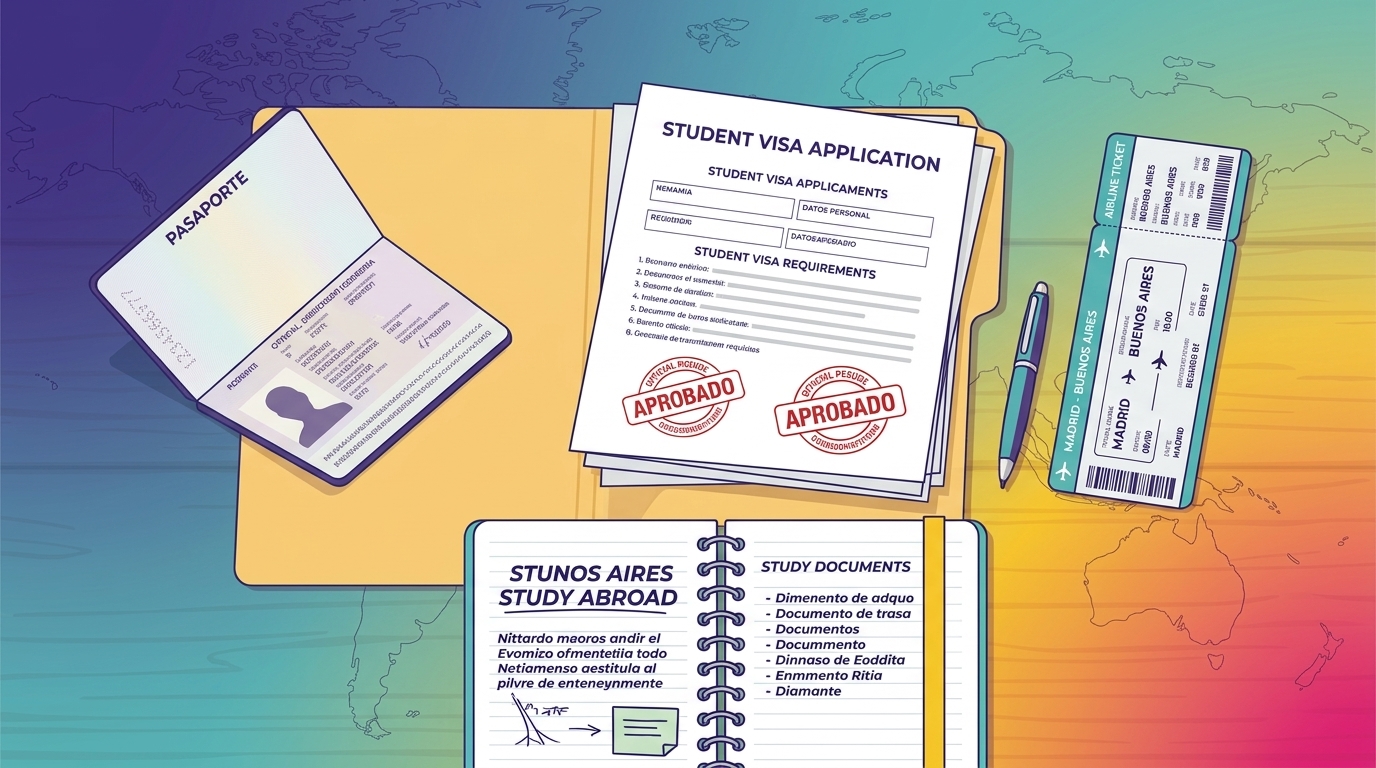

Quick answer: Yes, you can get an Argentine student visa by enrolling in a course at an institution registered with Argentina’s national registry (RENURE). The school preloads your data, you add documents such as health insurance and a return-ticket reservation, and you attend a consular interview. Processing times vary by consulate and nationality, so start at least two to three months before your trip.
This guide is general information, not legal advice. Immigration rules change. Always confirm the current list of requirements for your nationality on the official Cancillería (Argentine Ministry of Foreign Affairs) website before you apply.
What is the Argentina student visa, and who is it for?
Most visitors enter Argentina as tourists, and many nationalities can do so without a visa for a limited stay, typically up to 90 days. That is plenty for a two-week language course. It is not enough if you want to study Spanish for several months, work remotely from Buenos Aires without checking your calendar, or simply see where the city takes you.
The student visa is the route designed for people who come to Argentina to study. For Spanish learners it works because a full-time language course at a registered school counts as study. University exchange documents say it plainly: international students who plan to study in Argentina for longer than 90 days must obtain a student or resident visa.
In short, the student route is useful for:
- Language learners who want to study for three, six or twelve months.
- Digital nomads and remote workers who want a longer, more stable stay while learning the language. (If you plan to work, confirm your own situation separately; see the FAQ below.)
- Families moving for a school year with children who also study Spanish.
- Travelers who fell in love with the city and decided to stay longer.
The two main student visa types: -365 and +365
If you read Argentine immigration forums, you will see “visa -365” and “visa +365” everywhere. They are shorthand for the two categories on the Cancillería site:
| Category | Used when | Typical profile |
|---|---|---|
| Transitory Student Visa (“-365”) | Your course lasts less than a year | Language students, short programs, exchange semesters |
| Temporary Student Visa (“+365”) | Your studies last one year or more | Degree students, long programs |
University documents describe the choice in the same way: students from countries that need a tourist visa apply for the -365 or +365 depending on how long they will study. The Cancillería pages for both categories list almost identical requirements, and both were updated in April 2026.
A second distinction matters even more for many travelers: who needs a visa before arriving at all. Citizens of countries that do not require a tourist visa can often request an electronic entry permit for study purposes (known as TIE 24H) instead of a consular visa. Check the official list for your passport.
Requirements for the Argentina student visa (2026)
The Cancillería requirements are the same core list for the transitory and temporary student visa. Based on the official pages updated in April 2026, you should prepare:
- A valid passport and the standard application form for your consulate.
- Proof of enrollment at an Argentine institution registered with RENURE. The school gives you its registration number. Without it the application cannot move forward.
- Electronic data preloading by the school. The institution enters your last name, first name, nationality, passport number, date of birth, address, course and start date into the system before your application is processed. Your details must match your passport exactly.
- Medical insurance that covers your stay in Argentina. Universities add their own minimum coverage rules, so ask your consulate what level is accepted.
- A return-ticket reservation in your name. The consulate itself recommends that you do not buy a non-refundable ticket before the visa is granted.
- A mandatory in-person consular interview. The official pages state there are no exceptions.
- Additional documents for minors, such as an apostilled and translated birth certificate and a travel authorization signed by both parents.
- Other documents depending on your country, such as a background certificate or proof of funds. These vary, so confirm them with your consulate.
The official pages also state that meeting every requirement does not guarantee approval. The decision belongs to the Argentine state.
Step-by-step process
Step 1: Choose a course at a registered school
For a language student, the course is the foundation of the application. Look for a full-time schedule, a clear start and end date, and a school that can issue the required registration number and enrollment documents. At Wanderlust Spanish, the Visa and Spanish program is built around this need, with a flexible schedule Monday to Friday. [COMPLETAR: minimum weekly hours accepted for the visa, if applicable.]
Step 2: Ask the school for the enrollment documents and data preload
The school confirms your enrollment and preloads your information in the electronic system. This is why you should send your passport details early and check them twice.
Step 3: Prepare your documents
Gather your passport, insurance policy and the return-ticket reservation. Order apostilles and translations first if they are needed, since they take the longest.
Step 4: Book your consular appointment
Appointments depend on your consulate and can fill up quickly. Book as soon as your school confirms the data preload.
Step 5: Attend the interview
The interview is personal and mandatory. Bring originals and copies of everything. Be ready to explain what you will study, where you will live and how you will support yourself.
Step 6: Travel to Argentina and complete the registration
After the visa is granted, you travel and complete the steps required on arrival, which depend on the visa category. Your school can guide you through the local process. [COMPLETAR: steps Wanderlust supports on arrival.]
How long does it take?
The honest answer is that sources disagree, and that is a signal to plan with a buffer.
- Some third-party guides cite roughly 14 to 45 business days after submitting a complete file.
- Another guide gives a range of four to ten weeks.
- A university factsheet warns that the process can take up to three months and recommends starting at least two months before arrival, with applications possible up to 90 days before your study period starts.
Practical rule: start 90 days before your course begins and never buy a non-refundable flight until the visa is approved.
How much does it cost?
Fees and consular charges differ by nationality and are updated periodically. Third-party sources quote different amounts, so we do not repeat a number here. Check the fee schedule on the Cancillería or your consulate’s page. Budget separately for health insurance, apostilles and translations, the course itself and any courier costs. Early-booking discounts on tuition, up to 25% off according to our current offer, can reduce the course part of your budget. See the current discounts.
Common mistakes to avoid
- Choosing a course at an unregistered school. Ask for the RENURE number before you pay.
- Buying a non-refundable plane ticket first. Use a reservation until you have the visa.
- Typos in passport data. The school preloads your details, and any mismatch can delay the file.
- Starting too late. Waiting until you have already landed as a tourist and have only a few weeks left leaves no margin.
- Relying on forum posts. Rules change. Use the official Cancillería lists as your source of truth.
- Assuming the visa is the same as a work permit. Work rights are a separate question (see FAQ).
Student visa vs. other ways to stay
People often compare the student visa with the rentista visa (for people with a stable passive income). The two serve different purposes: the student route is built on enrolling in a course, while the rentista route is built on proving income. The right choice depends on how long you plan to stay, what you plan to do while you are here and what documents you can provide. If you are comparing both, make the decision with your consulate’s current requirements in hand.
Why study Spanish in Buenos Aires while you handle the visa?
A course gives your stay structure. You wake up with a schedule, speak Spanish every day and meet people who are in the same situation. At Wanderlust Spanish you can pick the rhythm that fits your plan, from six hours a week in the Chill course to 20 hours in the Intensive course, with lessons from 22 USD and locations in Palermo and Recoleta. [COMPLETAR: confirm which courses meet the visa’s minimum hours.]
Frequently asked questions
Can I get a student visa in Argentina just to study Spanish?
Yes. A language course at a registered institution counts as study, as long as the institution can issue the registration number and enrollment documents the visa requires.
What is the difference between the -365 and +365 visas?
They refer to the length of your studies: the -365 (transitory) is for courses under a year, and the +365 (temporary) is for studies of a year or longer. Both ask for similar documents.
Do I need a visa if I only study for a month?
It depends on your nationality and the course length. Many travelers study short courses as tourists. Official guidance for universities says people entering for educational purposes for more than two days should request the electronic entry permit or student visa. Check the current rule for your passport before you travel.
How long can I stay in Argentina with a student visa?
The permitted stay is tied to your course and the visa category. Third-party guides describe a 12-month validity that can be renewed, but confirm the exact term printed on your visa.
Can I work on a student visa?
This is a separate question and the rules are specific. Some sources say student residency holders who obtain residency documents can work legally. Do not assume it: confirm your situation with Argentina’s immigration authority or an immigration lawyer.
Is an interview really mandatory?
Yes. The Cancillería pages state that the applicant must attend a consular interview in person, with no exceptions.
Can I enter as a tourist and change to a student visa inside Argentina?
Some third-party sources say many students enter as tourists and convert to student residency in the country. Because rules and practice change, ask your school and the immigration office what applies to your nationality and dates.
What if my visa is rejected?
The Cancillería states that meeting the requirements does not guarantee approval. If you are refused, ask your consulate about the reason and the next steps before you reapply.
Official sources to check
- Cancillería Argentina, Transitory Student Visa and Temporary Student Visa pages (updated April 2026): ealem.cancilleria.gob.ar
- Argentina’s list of countries that do not require a tourist visa: cnyor.cancilleria.gob.ar
Ready to plan your stay?
Tell us your nationality, your arrival date and how long you want to stay, and we will help you choose a course and understand the paperwork. Get a quote or talk to us about Visa and Spanish.